The AdTech industry is undergoing rapid changes as it adjusts to the impacts of data deprecation and ever-changing privacy regulations. At the same time, there are fears of a potential economic downturn. How should you handle marketing in a recession? What should your marketing mix look like? In this blog post, we’ll cover how to navigate this uncertainty and three essential ingredients for your marketing mix.
First, we’ll look at the complexity and uncertainty facing marketers.
Turbulence with Twitter
After Elon Musk’s Twitter takeover in October 2022, half of Twitter’s top 100 advertisers left the platform and started to seek out alternatives.
The retail media boom
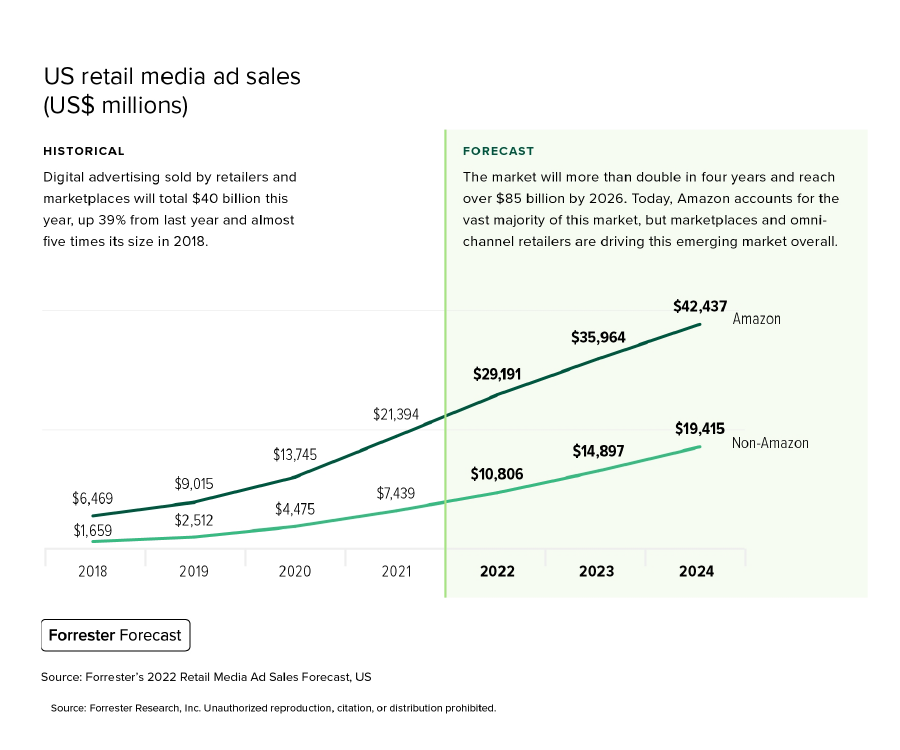
In the next four years, Forrester Research projects that U.S. retail media ad sales will double to reach 85 billion by 2026.1
Most of this growth is catalyzed by CPG and consumer electronic brands that have a scarcity of zero- and first-party data; they need more media closer to the point of purchase, especially as CFOs are scrutinizing budgets.
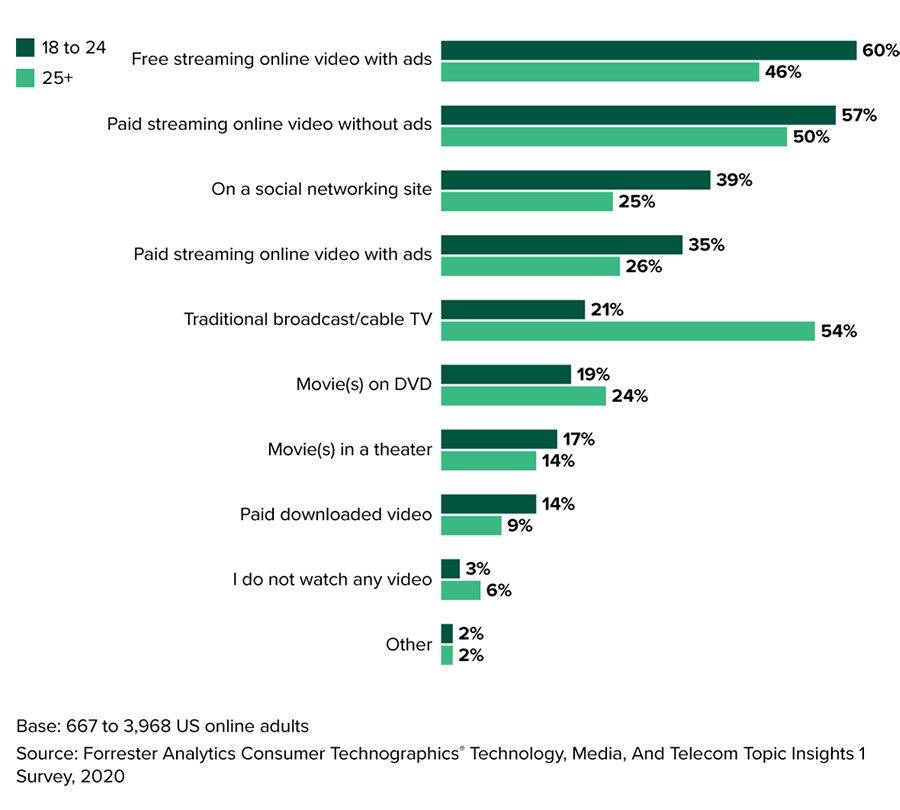
Consumption continues to fragment
It’s becoming harder than ever to reach the right person, at the right time, predict their intent, and get a 360-degree view of your customer.2
Data deprecation is top of mind
According to Forrester Research, updating their data strategy to address data deprecation is the number one priority for marketers. Addressing data deprecation is also a priority for consumers, who increasingly feel that audience targeting is more intrusive than beneficial.3
Data deprecation affects identity solutions
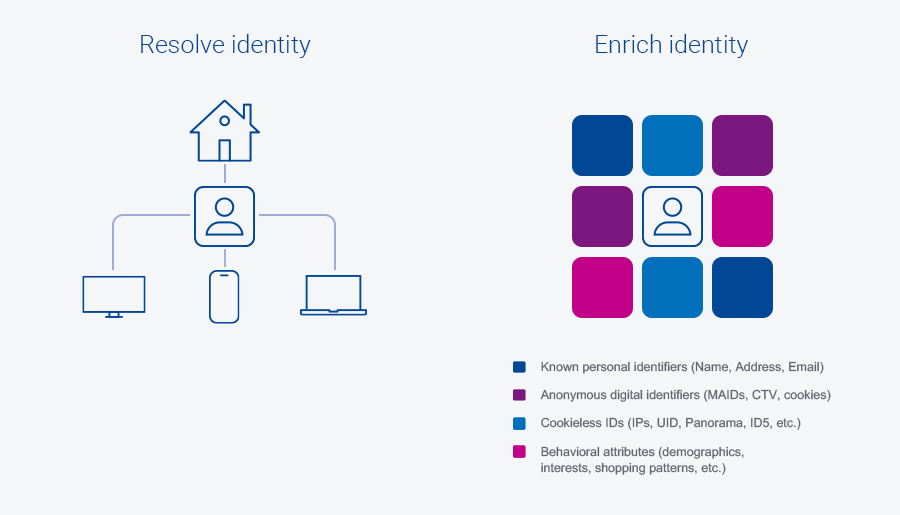
Third-party data and mobile ad IDs (MAIDs) are the connective tissue for identity solutions. As we see those signals go away, there are fewer linkages to resolve identity and it’s leading to a rise in fragmented, duplicated, and shallow identity.
Recession fears
In addition to everything happening in AdTech, there are also fears of a possible recession. According to Forrester, 40% of Gen Z and 41% of Millennials believe fears of an upcoming recession are greatly exaggerated. On the other hand, only 24% of Gen X and 12% of Baby Boomers agree.4
Navigate uncertainty and marketing in a recession
With the current macroeconomic conditions, data deprecation, and fragmented consumption in mind, what should your strategy look like for marketing in a recession? Forrester recommends three strategies:
- People-led planning
- Test creative
- Optimize for marginal costs
People-led planning
Planning doesn’t have to be fragmented. Map offline and online media exposures to consumer decision journeys. Strategies like lifetime value (LTV) driven audience segmentation to correlate awareness at top of the funnel layered with demand generation exposures harvested later in the funnel. To do this, it’s crucial to work with providers that give you visibility into the audience buyer’s journey to awareness, intent, consideration, and purchase, all the way through to loyalty.5
Test creative
Make your creative work harder for you. Apply the same rigor with your creative that you applied to segmentation. Utilize multivariate testing to identify creative that is winning or losing. When you understand how each variable performs, you can scale the variables with creative optimization to have a material impact on performance.
Optimize for marginal costs
Optimize for marginal costs of acquisition, not just the average. Adjust for incrementality – what is the cost to acquire one more customer, rather than the average cost of acquisition.
Find the right marketing mix in a recession
With these changes in mind, how can you find the right marketing mix in a recession? We can show you the way.
You can create the right marketing mix with three key ingredients:
- Audiences
- Identity
- Activation
Let’s explore each ingredient to start you down the path toward marketing campaign success.
Audiences: Know your customer
The first ingredient to add to your marketing mix in a recession is your audience. Knowing your customer is key to targeting the right audiences successfully. Data-driven targeting can help you find your best audiences based on demographics, modeled lifestyles, and behaviors to improve marketing campaign performance.
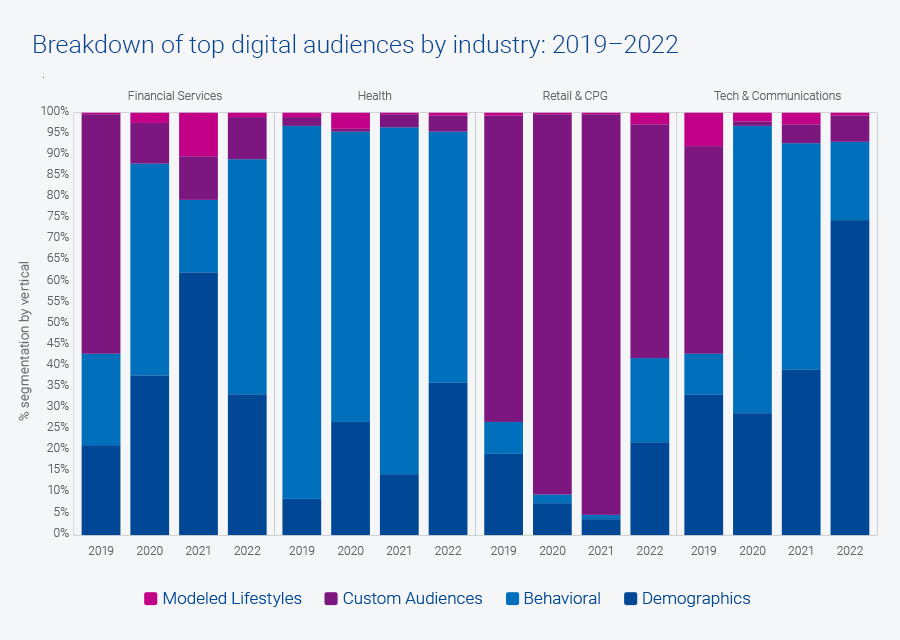
Not sure where to start when it comes to developing your target audience strategy? We can help. We track digital usage of our data used by advertisers and identified the top four digital audiences that advertisers purchased over the last four years.
Four digital audiences to consider
Marketing strategies are only as strong as the data foundation they’re built on. The top four digital audiences that advertisers are purchasing from Experian include:
- Demographics
- Behavioral
- Modeled Lifestyles
- Custom Audiences
Demographics
Examples include age, gender, relationship status, living situation, life experience, and employment.
Behavioral
This audience allows marketers to identify households that are more likely to engage in certain activities or belong to certain groups.
Modeled Lifestyles
Experian’s Mosaic® USA segmentation. This is a household-based consumer lifestyle segmentation system that classifies all U.S. households and neighborhoods into 71 unique types and 19 overarching groups, providing a 360-degree view of consumers’ choices, preferences, and habits.
Custom Audiences
This is an audience blended from multiple sources or derived from first-party look-alike modeling.
Changes in digital audience strategies
Over the last four years, Modeled Lifestyles and Custom Audience purchases represented the smallest share of digital activation, while Behavioral and Demographic segments were more popular with advertisers.
When the U.S. rolled out the COVID-19 vaccine, consumers became more active. People were shopping in stores, returning to the gym, and taking trips that they had postponed during the height of the pandemic. Marketers turned to higher compositions of Demographic and Modeled Lifestyles to reach these audiences between April and December of 2021.
Sustained growth in Demographic audience activation could suggest a move back to tried and true audience strategies as signals continue to decline and amid evolving regulation. With economic uncertainty, marketers return to what they know. Traditional targeting methods like Demographics and Modeled Lifestyles are the baseline of many marketing strategies and we predict that we will continue to see marketers activating against these data sets.
Download our 2023 digital audience trends and predictions report to discover our full insights on how digital activation has changed and where we’re headed.
Identity: Understand the customer journey
Identity resolution is the next ingredient that you should add to your marketing mix in a recession. It should be a foundational element of every marketer’s strategy.
What is identity resolution? In the simplest terms, identity resolution is the process of matching different devices, IDs, and touchpoints back to a single person. Identity resolution expands marketers’ addressability and reach of their target audience and helps inform and measure accurate customer journeys.
Identity resolution challenges
Identity resolution faces two main challenges:
- Making the data actionable. Humans are complex. We have behaviors that change based on our current social groups and life events, we use dozens of internet-connected devices in a single day, and we exhibit distinct behaviors that happen online and in the physical world. This means marketers have mounds of data being collected from different channels based on that dynamic behavior of people, making it feel impossible to organize the data in a way that makes it feel actionable, know how it ties back to real humans, and ensure they’re doing it in a responsible and compliant way.
- Signal loss. Marketers continue to lose important signals that they’ve previously been able to rely on to inform their next move. Signals are being lost as our industry places more privacy regulations and restrictions on what can be tracked and as consumers themselves change behaviors to protect their privacy.
As consumer behaviors continue to change and signals disappear, identity resolution gets exponentially harder.
Expand addressability and reach with identity resolution
Data deprecation adversely affects identity solutions, but identity resolution should be a key ingredient in your marketing mix. Identity resolution ensures that consumers experience more relevant products, offers, and messaging – allowing you to reap the ROI benefits of hitting consumers at the perfect point in their journey.
Finding an identity resolution partner
When selecting an identity resolution partner, you should understand the data and processes that are implemented behind the scenes. It’s important to know:
- What makes up their consumer database?
- How fresh is their data?
- What identifiers can they match?
- How do they protect consumer privacy?
At Experian, we’re rooted in deterministic offline data which creates a stable foundation. We then layer in digital and behavioral touchpoints. We have decades of experience managing consumer data safely. We have insights on 250 million individuals, three billion devices, and one trillion device signals. Our databases evolve as quickly as the human behavior powering them does.
Our approach to identity resolution is open and agnostic. This means we can collect and ingest nearly all available offline and online identifiers. We can do this in all types of environments, including connected TV (CTV), mobile, and cookieless. We have two types of identity resolution:
- Offline
- Digital
This ensures we control how known and anonymous data points are connected for consumer privacy purposes.
Identity resolution in action
Our depth of data gives our clients access to see the whole human and gain the context around singular data points.
Let’s walk through an example of our identity resolution capabilities.
Challenge
Our TV media platform client needed to measure the effectiveness of an ad campaign they were running on behalf of a leading consumer electronics brand. The TV platform wanted to be able to accurately report on which consumers made a purchase after seeing the brand’s TV commercial on their platforms.
Solution
Using our digital identity resolution services, our client could capture online purchases made on the brand’s website and link them back to a consumer profile. In addition to online transactions, our client used our offline resolution services to resolve email addresses of consumers that purchased offline, using warranty registration details.
With online and offline purchase data now resolved back to an individual ID, we also performed identity resolution on viewers in their TV subscriber files that had also been exposed to the TV commercial. This allowed us to identify subscribers that had both seen the ad and purchased a product.
We provided our client with a packaged report that they could white-label and pass along to the brand.
Results
By providing this attribution reporting to the brand, the TV platform could validate the ROI spent on their platform. The brand was extremely satisfied with the results, and they transitioned the one-off TV commercial into an ongoing campaign and purchased quarterly measurement. This led to solid recurring revenue for the TV platform.
Activation: Experiment and measure the impact
The third and final ingredient to finding the right marketing mix in a recession is activation. Experimentation is the best way to determine which channels work best for your business and provide the most ROI.
Demand-side platforms (DSP), video platforms, and sell-side targeting are three important activation channels that you should consider experimenting with.
Demand-side platforms
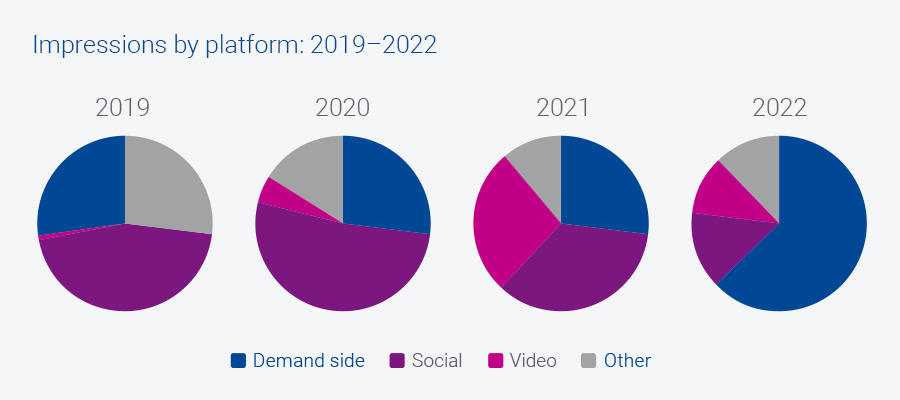
We continue to see increased demand for environments where alternative identifiers are being transacted (like DSPs and video). Social channels are decreasing; this can be attributed to changes in privacy, security, and concerns around brand safety.
Amazon’s DSP is catching up with Google and Meta to become a top ad platform.
Video platforms
Digital video and other video channels like over-the-top (OTT) and CTV will continue to grow. Digital video will capture the most ad spend in 2023 (22.4% in 2023 vs 19.3% in 2022). Because of this, advertisers are placing bigger bets on the combination of addressable and CTV.
Sell-side targeting
Data sharing relationships will become strongest on the sell-side as we move toward consented first-party data. Ad dollars are shifting to channels that use the sell-side approach, like retail media and CTV.
Sell-side targeting enables brands to access large amounts of inventory across publishers and retailers. By getting closer to the ad inventory, advertisers can future-proof their strategies by having more access to better data signals. Direct relationships like these will be necessary as privacy regulations increase and signal loss continues.
We can help you find the right marketing mix in a recession
Now is the time to be opportunistic. Gaining share of voice during a downturn is cost-effective. Proactive marketing builds pent-up demand.
Delivering the right message in the right place at the right time means truly knowing your prospects and customers as individuals. At Experian, we bring you the highest-resolution picture of people, so you and your customers can connect with confidence.
You can turn prospects into customers with the right audience. By understanding your customers better, you can find more like them. Together we can power better results.
Find the right marketing mix
Check out our webinar, “Find the right marketing mix with rising consumer expectations.” Guest speaker, Nikhil Lai, Senior Analyst from Forrester Research, joined Experian experts Erin Haselkorn and Eden Wilbur. Watch the recording to learn:
- New data on the complexity and uncertainty facing marketers
- Consumer trends for 2023
- Recommendations on finding the right channel mix and the right consumers
Get in touch
Sources
- 2022 Retail Media Ad Sales Forecast, US. Forrester Research, Inc. 2022.
- Forrester Analytics Consumer Technographics® Technology, Media, and Telecom Topic Insights 1 Survey. Forrester Research, Inc. 2020.
- CMO Pulse Survey. Forrester Research, Inc. July 2021.
- Forrester’s Consumer Energy And Retail Online Survey. Forrester Research, Inc.
- People-Led Planning Solves Customer Problems to Drive Growth. Forrester Research, Inc. August 2, 2021.
Latest posts

Year after year, CES signals where marketing is headed next. In 2026, the message was clear. Progress comes from connecting data, intelligence, and outcomes with discipline, not spectacle. Across AI, programmatic media, and measurement, the same priorities surfaced again and again. Under the bright lights of Las Vegas, three themes cut through, and each one pointed to a future where data, intelligence, and outcomes move in lockstep. Here are the three themes that defined CES 2026. 1. Agentic AI proved that it’s only as good as its data inputs AI was once again the star of the show. At CES 2026, marketers focused less on demos and more on proof that AI improves decisions, reduces friction, and drives outcomes. Every credible use case traced back to accurate, privacy-first data. What changed at CES was how that intelligence is being applied. Agentic AI systems designed to act autonomously are moving beyond insights and into execution. From media buying to optimization, these agents are increasingly expected to make decisions at speed and scale. That shift raises the stakes for data quality. When AI is operating campaigns, not just informing them, accuracy and privacy are non-negotiable. “This year's CES made agency priorities crystal clear. Efficiency, differentiation, and outcomes. As agentic AI takes on more responsibility across planning, activation, and measurement, Experian gives agencies a robust data and identity foundation they can trust to own the outcome for every client.”Greg Williams, Chief Operating Officer Without accurate, privacy-compliant data, AI agents struggle to reflect real behavior or support responsible personalization. A reliable, privacy-first data foundation is what turns AI from an interesting experiment into an operational advantage. That advantage gets even stronger when it’s anchored in an identity graph that understands people and households across channels. When identity and intelligence move together, AI becomes more accurate, accountable, and effective at driving outcomes. In an AI first world, the strongest signal isn't scale. It's data quality. 2. Curation goes mainstream Curation is no longer experimental. At CES, it showed up as a mandated capability for buyers and sellers navigating fragmented signals and complex supply paths. Marketers want intentional media buys they can explain, defend, and repeat. AI is accelerating this shift. As AI systems take on more responsibility for planning, packaging, and optimization, curation provides the guardrails. It defines what “good” looks like (premium supply, trusted data, and clear performance goals), and allows AI to operate within those constraints driving the optimal outcomes for marketers. “Our sell-side clients walked into CES asking how to stand out in a crowded landscape. The answer kept coming back to data-driven curation. With Experian Audiences and Curated Deals, SSPs and publishers can improve targeting within PMPs, package inventory more intelligently, and prove value with confidence. As we head into 2026, data is no longer a supporting input. It needs to be at the center of every conversation.”Chris Meredith, Head of Sell-Side Rather than maximizing inventory access, curation prioritizes control, transparency, and performance. Buyers want premium supply aligned to specific goals. Sellers want clearer paths to demand. They can play the odds or own the outcome. When data leads, they own it. When curation is powered by high-fidelity audiences and a connected identity framework, it becomes even stronger. That’s what allows curated deals to deliver clarity, confidence, and repeatable performance. This shift reflects a broader move away from probability-based buying toward outcome ownership, where AI-driven systems are measured not on activity, but on results. 3. Activation and measurement finally shared the same stage Activation and measurement are now coming together around shared data and identity. CES 2026 marked a turning point where closing the loop felt achievable, not aspirational. Both the buy-side and sell-side face pressure to show that media investment drives outcomes. Agentic AI was a quiet driver of this optimism. As AI agents increasingly manage activation decisions in real time, marketers need measurement systems that can keep up. That requires a shared data and identity foundation. One that allows AI-driven actions to be evaluated against outcomes consistently, across channels and partners. In healthcare, accuracy is everything. Our clients need to reach patients and healthcare professionals in ways that respect privacy while driving meaningful outcomes. CES underscored that privacy, identity, and measurement must work in harmony. That’s how health marketers reduce risk and increase the likelihood that every message leads to better care.Sheila Wirick, Sales Director, Health Achieving that requires a consistent identity spine that connects planning, activation, and outcomes across channels. And that spine is strongest when it’s built on accurate, privacy-first data and audiences that understand people and households. That connection allows marketers to move beyond proxy metrics and evaluate performance based on tangible results. When campaigns and measurement rely on the same data foundation, AI-driven platforms can optimize toward outcomes such as new customers, account growth, or in-store activity, not just delivery metrics. That’s the connective layer that turns disconnected touch points into a measurable, outcomes-based system. Three takeaways from CES 2026 AI is maturing, but only for teams with accurate, connected, privacy-first data that AI agents can act on responsibly. Curation is scaling, giving both humans and AI systems clearer paths to quality, control, and differentiation. Activation and measurement are aligning, allowing AI-driven decisions to be judged on outcomes, not assumptions. We’re building for that world today. One where agentic AI operates on a trusted data and identity foundation, curation defines the rules, and outcomes determine success. With the right foundation and the deep data inputs, you can move faster, reduce risk, and let intelligence (human and artificial) work together to deliver results that last long after the neon lights fade. Connect with us FAQs What was the biggest shift discussed at CES 2026 for marketers? The biggest shift was the move from hype to accountability. Marketers focused on data quality, intentional media buying, and outcome-based measurement rather than experimental technology. Why did AI discussions emphasize privacy-first data? Privacy-first data supports accuracy, compliance, and trust. AI models built on unreliable or opaque data struggle to reflect real consumer behavior and create risk for brands. At Experian, privacy and compliance are built in. Every data signal, attribute, audience, and partner goes through our rigorous review process to meet federal, state, and local consumer privacy laws. With decades of experience in highly regulated industries, we’ve built processes that emphasize risk mitigation, transparency, and accountability. How does curation help reduce programmatic complexity? Curation simplifies buying by pairing premium inventory with specific audience and performance goals. This approach reduces waste and creates clearer, more repeatable buying paths. With the acquisition of Audigent, Experian is now more than just a premier data provider. We’re also a full-service curation partner. Together, we deliver end-to-end programmatic curation across data, inventory, and optimization, helping brands and publishers unlock smarter, more scalable media strategies. What does it mean to align activation and measurement? It means using the same identity and data foundation to plan campaigns and evaluate results. This alignment allows marketers to measure success based on business outcomes, not just delivery metrics. With Experian, marketers can plan, reach, and measure in a connected cycle. Every impression is measurable. Every audience is accurate. Every decision is powered by data ranked #1 in accuracy by Truthset. Why is identity central to all three CES themes? Identity connects data across channels and stages of the customer journey. It enables accurate AI, effective curation, and consistent measurement within one system. Experian delivers identity resolution at the scale, accuracy, and compliance required by the world’s largest enterprises. Our solutions are:- Built on trust: Backed by 40+ years as a regulated data steward and rated #1 in data accuracy by Truthset, so you can act with confidence.- Powered by our proprietary AI-enhanced identity graph: Combining breadth, accuracy, and recency across four billion identifiers, continuously refined by machine learning for maximum accuracy.- Seamlessly connected: Pre-built data integration with leading CDPs, DSPs, and MarTech platforms for faster time to value.- Always up to date: Frequent enrichment and near-real-time identity resolution through Activity Feed for timely personalization and more responsive customer engagement.- Privacy-first by design: Compliance with GLBA, FCRA, and emerging state regulations baked in at every step, supported by rigorous partner vetting. Latest posts

Why an identity framework matters more than any single identifier The challenge facing marketers today isn't a single identifier on a deprecation timeline; it’s the increasing fragmentation of signals and identifiers across browsers, devices, apps, and platforms. This shift introduces complexity into how audiences are reached and measured, as signals behave differently in every environment, and it becomes more complex to piece together a complete view of the consumer. Each environment contributes to its own set of visibility gaps, making identity less predictable and more uneven. The result is a patchwork of inconsistent identity signals rather than a single, predictable decline. While you can’t control how platforms evolve, you can control how you respond to fragmentation. The future won’t be defined by the loss of any single identifier, but by your ability to unify, interpret, and activate the many signals that remain. Marketers who adopt a flexible, identity framework will be best positioned to create consistency in an otherwise fragmented landscape. At Experian, we believe flexibility starts with intelligence. For decades, we’ve used AI and machine learning to help marketers understand people’s behavior more clearly, respect their privacy, and deliver messages that drive business outcomes. Our technology brings identity, insight, and intelligence together, so even as the number of signals grows and becomes more varied across environments, marketers can reach the right people with relevance, respect, and simplicity. This intelligence acts as the connective tissue across fragmented ecosystems, ensuring marketers can recognize and reach audiences consistently wherever they appear. What forces are driving fragmentation in identity and signals? Changes to traditional IDs Since Apple introduced App Tracking Transparency (ATT), access to the Identifier for Advertisers (IDFA) has become inconsistent across apps and devices. Google’s evolving Android privacy roadmap adds another layer of variability, fragmenting mobile addressability. Safari and Firefox have long restricted third-party cookies, while Chrome continues to support them for now. This creates different signal availability across browsers, contributing to an uneven and increasingly fragmented identity landscape on the open web. Shifts in signals IPv4 to IPv6 migration introduces mismatched identity structures that complicate continuity across environments. Platform-driven fragmentation Closed ecosystems and uneven adoption of evolving RTB standards (like OpenRTB 2.6 updates designed to support new identifiers and consent signals) create differences in which identifiers and consent signals are shared in the bidstream. At the same time, the rise of alternative or “universal” IDs—often developed by individual platforms, publishers, or technology companies—means that multiple ID types can appear within the same auction, each with its own structure, rules, and level of support. These differences reduce interoperability across platforms and contribute to a more fragmented activation landscape. Each change creates an identity silo. Together, they form an ecosystem defined by fragmentation rather than absence. Without an identity framework, these environments operate as disconnected identity islands. A multi-ID world requires a unified identity framework Alternative IDs play an important role, but they also expand the number of signals marketers must reconcile. Without a consistent identity layer, more IDs often mean more complexity—not more clarity. Common alternative IDs in use today: UID2: The Trade Desk’s Unified I.D. 2.0, an iteration of their original Unified ID 1.0, which was still reliant on third-party cookies, creates persistent IDs with user-provided email addresses and phone numbers. ID5: This independent identity provider builds an identity infrastructure that powers addressable advertising across channels. It can create an ID based on both deterministic and probabilistic data. Hadron ID: Hadron ID is a unique, interoperable identity system (including first-party, audience-based, contextual, deterministic, and probabilistic) developed by Audigent, now part of Experian, to drive revenue for publishers by making their audience data and inventory actionable for media buyers. Industry reports suggest roughly one-third to two-fifths of open-auction traffic carries alternative IDs, sometimes multiple per request. Among Experian clients, adoption of alternative IDs rose 50% year over year, with a 30% increase in IDs resolved to individuals via our Digital Graph. Identity isn’t disappearing; it’s multiplying. A modern identity framework resolves these identifiers into a single, privacy-safe consumer view. Why CTV makes an identity framework essential Beyond alternative IDs, device-level identifiers also play a major role in today’s ecosystem and add to the fragmentation marketers must navigate. Connected TV (CTV) environments introduce additional fragmentation. CTV IDs A CTV ID is an identifier used to deliver, target, and measure ads on CTV devices, including smart TVs, streaming devices, gaming consoles, and more. Unlike MAIDs, which act as universal device identifiers across apps, CTV environments often generate multiple, platform-specific IDs for the same physical device. Different operating systems, publishers, or streaming platforms may each assign their own identifier—such as Roku ID for Advertisers, Amazon Fire Advertising ID, Samsung TIFA, or Apple IDFA for CTV. As a result, a single household or TV can appear under several distinct IDs, making cross-app or cross-platform recognition more complex and further reinforcing the need for a unified identity framework. Experian’s identity framework is powered by predictive and generative intelligence that makes resolution faster and more human-centered. Our AI models fill gaps where data signals are missing, infer behaviors responsibly, and continuously optimize for accuracy, so marketers can personalize ads responsibly, even in a fragmented ecosystem. More importantly, our framework normalizes signals across disconnected environments, creating a consistent identity spine that follows the consumer through their fragmented digital journey. An identity framework connects online and offline signals Fragmentation extends beyond digital environments. Marketers manage offline data from in-store transactions, loyalty programs, household identifiers, and phone numbers that rarely align cleanly with digital signals. As consumers move between online and offline touch points, an identity framework connects these signals into a coherent view of the individual. This foundation allows marketers to recognize the same consumer across environments that expose different identifiers. Four keys to future-proofing your media with an identity framework 1. Know your customer: Unify and enrich your first-party data First-party data is a marketer’s most durable asset, but it’s often scattered and incomplete. Unify it: Bring CRM records, site interactions, and loyalty data into a single platform to build a holistic customer view. Use Offline Identity Resolution to resolve your first-party offline personally identifiable information (PII) back to a consolidated consumer profile, removing duplication of users in your data set. Enrich it: Append Experian Marketing Attributes to uncover demographics, lifestyle markers, and purchase behaviors you can’t see on your own, and use Offline Identity Append to fill in missing offline data points (such as name, address, phone, etc.) to create a more complete and actionable customer profile. This gives you richer profiles that drive more personalized targeting and messaging. Fragmented ecosystems make unified first-party data even more essential. A connected view allows marketers to anchor identity against a stable, proprietary foundation. As identifiers vary across environments, marketers need flexible, privacy-first ways to understand where their audiences are and how to reach them. 2. Find your customer: Expand how you discover and reach audiences in a fragmented landscape As identifiers vary across environments, marketers need flexible, privacy-first ways to understand where their audiences are and how to reach them. Contextual signals: Experian’s Contextually-Indexed Audiences map content to consumer insights, so you can target intent-rich environments. Geographic insights: Our Geo-Indexed Audiences help you find regions that over-index for specific traits and activate them across your preferred platforms. Syndicated and Partner Audiences: Choose from 3,500+ prebuilt segments or 30+ partner data sources spanning health, retail, travel, and more. Curation: As a full-service curation partner, we enable private marketplace (PMP) deals that are privacy-safe, identity-agnostic, and performance-optimized. Together, these approaches help you confidently reach your audiences – using multiple types of signals that complement your identity strategy and create a clearer picture across fragmented environments. 3. Reach your customer: Maximize scale through interoperability As signals and identifiers proliferate across environments, interoperability is essential to maintain consistent reach. Experian’s Offline and Digital Graphs unify disparate signals (MAIDs, CTV IDs, alternative IDs, IP, and more) so marketers can recognize and engage audiences reliably across channels, devices, and platforms. Interoperability matters because it turns a collection of disconnected identifiers into a coherent identity framework that can actually be activated. The following capabilities demonstrate how that comes to life. Unified identity: Create a consistent view of your audience, even when different environments expose different identifiers. Experian’s identity framework connects these signals into a single, actionable identity spine. Expanded reach: OpenX enriched its supply-side identity graph with Experian’s audiences, making our data available directly across OpenX supply and formats. By matching more of the starting audience and identifying more users in the bidstream, marketers see higher match and activation rates, extending reach in hard-to-address environments like Safari and mobile web. Measure success: Optimize based on outcomes If you can't measure your marketing, you can't improve it. Experian Outcomes, powered by our holistic understanding of the user across online and offline touch points, closes the loop by connecting media exposures to real-world actions (store visits, purchases, or site conversions). With these insights, you can: Prove ROI across digital and TV Attribute success to the right channels and tactics Continuously refine targeting, creative, and spend allocation Outcome-based measurement makes your strategy adaptive, so dollars flow to what drives results. As signals multiply across environments, connecting exposures to outcomes requires a unified identity foundation. Experian closes the loop by unifying exposures across disconnected touch points, enabling holistic attribution and optimization. Our AI-powered simplicity drives continuous improvement. From predictive modeling to agentic workflows that automate optimization, we’re investing in generative AI to help marketers spend less time on manual setup and more time on strategy and outcomes. The Experian identity framework advantage Experian connects fragmented signals into a single, actionable identity framework built for long-term resilience. What our identity framework delivers Interoperability: We support all major identifiers, including alternative IDs, IP address (v4 and v6), contextual signals, and both first- and third-party data. Flexibility: Whether you’re activating syndicated audiences, tapping into partner audiences from 30+ data providers, or curating custom segments through Audigent, our solutions meet you where you are. Scale: With four billion IDs resolved in our Digital Graph and 280 million telephones in our Offline Graph, we deliver unmatched reach across digital and offline environments. AI that makes marketing more human: We bring together identity, insight, and automation through responsible AI, helping marketers see audiences clearly, act with intelligence, and optimize with respect for privacy. Our approach is delivering results across a range of programmatic players. These outcomes demonstrate how a unified identity framework delivers performance in environments where signals, identifiers, and devices operate in silos. Proven results powered by Experian’s identity framework Sonobi increased programmatic addressability across the mobile web by 25% and delivered a 20% lift in impression value through our identity graph, driving stronger campaign connections and greater publisher returns. One DSP used our Digital Graph to match more MAIDs, CTV IDs, and IP addresses to online conversions, enabling increased accuracy of their attribution and measurement. They achieved an 84% synced ID rate and a 9% increase in match rate. For Cuebiq, we significantly increased match rates and resolved data from cookieless environments, such as Safari. By combining separate data streams and resolving 85% of total events to a household, Cuebiq expanded on the household IDs to identify MAIDs that are observed in-store, enabling accurate cross-channel measurement. Our Digital Graph allowed MiQ and their clients to expand the reach of their seed audiences across devices by 51% and cookieless IDs by 64%. As a result, MiQ can provide marketers with future-proofed connected planning, advanced targeting, and precise measurement. We’re your partner in building identity framework that lasts: resilient to change, adaptive to new signals, and focused on outcomes. What comes next for signals and identity? The future isn’t defined by any single identifier. It’s defined by the ability to unify and activate across a fragmented identity ecosystem. The winners will be those who adopt interoperable, outcome-driven identity frameworks today. Those strategies will increasingly be powered by responsible AI, systems that simplify workflows, predict opportunity, and optimize in real time while keeping people at the center. At Experian, we see AI not as automation for its own sake, but as a way to make marketing more human, relevant, and respectful. Your playbook for navigating fragmentation Experian connects the fragmented identity ecosystem, unifying alternative IDs, IP signals, contextual data, and first- and third-party assets into a consistent, actionable identity foundation. With proven lift across partners like Sonobi and new offerings like Contextually-Indexed Audiences, we help you build campaigns that perform in a fragmented landscape. Download our 2026 Digital trends and predictions report to explore how identity, interoperability, and measurement will define the future of advertising. Download About the author Henry Schenker Group Product Manager, Experian Henry has nearly 15 years of experience in Digital Advertising, Social Media Marketing, Data Licensing & Analytics, Front-End Engineering, Technical Architecture & Integrations, Profit & Loss Management, and Enterprise-Level Contract Negotiation across the U.S., EMEA, and Asia Pacific regions. Prior to re-joining Experian, Henry held critical go-to-market and product roles at noted industry-disruptors Media.Monks and Attain. From 2018 – 2020, he served as the Vice President, APAC of Innovid (now publicly traded, NYSE:CTV), leading the company's expansion into Japan, Singapore, and Australia. The preceding 4 years with Tapad (acquired by Experian), allowed Henry to become a seasoned Sales Engineer, grow and lead a global Technical Integrations team, and relocate to Singapore, leading sales and operations in the APAC region. Before beginning his career and learning front-end engineering on-the-job at Wyng (formerly Offerpop), Henry received a dual-major (BA/BS) in Sociology and Economics & Finance from Bard College in New York. FAQs Why is signal and identity fragmentation increasing across digital and offline channels? Signal and identity fragmentation is increasing across digital and offline channels because consumers now engage across more devices, platforms, and environments. Each environment introduces its own identifiers and privacy rules. This growth creates more signals overall, which increases the need for unification rather than reliance on a single ID. How should marketers think about alternative IDs in a multi-signal ecosystem? Alternative IDs add reach and coverage when they connect through a common identity framework. They work best alongside first-party data, device identifiers, and contextual signals. Resolution turns multiple IDs into one consistent view of the consumer. What role does unified identity play in CTV and cross-device media? CTV environments often assign multiple platform-specific identifiers to the same household or device. A unified identity layer links those identifiers together. This approach supports consistent audience recognition across streaming apps, devices, and digital channels. How does unified identity support accurate measurement and attribution? Unified identity connects media exposure to outcomes across digital, TV, and offline touch points. It enables marketers to see how different channels contribute to real actions like visits or purchases. Measurement improves when identity remains consistent across the full journey. Why does an identity strategy matter beyond digital advertising? Identity extends into offline signals such as transactions, loyalty activity, and household data. A unified foundation aligns online and offline interactions into one coherent profile. This connection supports planning, activation, and measurement across the entire customer experience. Latest posts

Experian Audiences help financial marketers serve consumers with very different financial habits, digital behaviors, and spending patterns. Backed by our deep insight into income, debt, and credit, digital behavior, and household dynamics, our approximately 400 financial audiences and 3,500+ syndicated segments give financial marketers the ability to engage consumers with relevance across every life stage, channel, and financial mindset. To help financial marketers build effective, more adaptable programs, in this article, we’ll explore two approaches: Generational: How financial behaviors differ across life stages Seasonal: How consumer financial motivation spikes at key times of year Together, these approaches help financial marketers reach the right consumers with the right message at the right moment. Generational approach Financial marketers face a new kind of challenge: some consumers still visit branches, while others manage nearly every financial task from their phones. That gap reflects more than a channel preference; it signals distinct financial needs, confidence levels, and expectations for how money should work across generations. How do financial behaviors differ across generations? Generational digital behaviors The data below highlights key differences in how younger consumers engage with digital financial tools compared with Boomers. Behavior/metricGen Z and MillennialsBoomersUse peer-to-peer transfer apps (Venmo, PayPal)~50%~20%Use a mobile wallet daily79% (Gen Z), 67% (Millennial)Nearly 70% have never used one Younger generations are driving a mobile-first approach to money management, while Boomers are far less likely to manage their finances this way. They prioritize tools that help them build credit, reduce debt, manage rising costs, and automate everyday tasks. This behavior is reshaping how financial institutions think about acquisition, product relevance, and loyalty. Generational workforce and retirement dynamics As Boomers retire, their focus shifts to protecting accumulated wealth, steady income, and simplified service experiences. These changes are reshaping household finances and long-term planning behaviors across the country. The table below outlines how shifting workforce composition and retirement milestones differ across generations. Behavior/metricGen Z and MillennialsBoomersShare of the U.S. workforceGrowing toward 74% of the global workforce by 2030 (younger generations collectively)~15% of the U.S. workforce and shrinkingRetirement outlookExpected age to retire 67-69~75 million people will have retired by 2030 Marketers need to do more than track trends; they need to act on them with confidence. That’s where Experian Audiences come in. Turn generational insights into action with Experian Audiences Experian Audiences turn complex generational data into actionable marketing segments, helping financial brands reach the right people with the right message across every life stage. We offer approximately 400 financial audiences, each reflecting distinct financial priorities, from debt management to wealth preservation. These audiences are built using privacy-safe data and grounded in our deep understanding of income, debt, and digital behavior. Experian’s financial audiences blend credit, behavioral, and demographic signals to help you connect with consumers based on: Debt profile, including type and overall burden Income tier and earning stage Financial confidence and digital engagement habits How can marketers activate generational insights with Experian Audiences? Each generation has unique financial journeys, needs, and motivations that marketers can address with Experian Audiences designed to reach: Generation Z (Gen Z) Millennials Generation X (Gen X) Baby boomers (Boomers) In addition to these four generational segments, Experian Audiences also includes segments that apply broadly across life stages. These audiences reflect core financial attributes, such as income, capacity, and lifestyle, that are consistently relevant and can be layered onto any generational strategy. Ability to pay Generational income bands Income Mosaic® USA While Fair Lending regulations prohibit age-based targeting, these groups are not built on age itself. Instead, they’re derived from observable financial behaviors and signals that often align with different life stages; allowing marketers to engage consumers in a compliant, behavior-driven way. We also offer FLA-friendly¹ audience segments when required, alongside expanded options for non-lending campaigns, supporting initiatives such as brand and product awareness, deposit growth, credit union membership, and other programs that don’t rely on credit-based targeting. You can find the full taxonomy paths in the appendix. This generation is young, digitally savvy, and highly engaged. Gen Z is beginning their financial journey with a focus on independence and debt management. Their preference for mobile-first tools and peer-to-peer payments reflects an expectation for simple, accessible financial experiences. Campaigns centered on credit-building tools, savings apps, and financial literacy resources are especially relevant for this group. Behavior/metricGen ZUse peer-to-peer transfer apps80%+Use mobile wallets daily79% Here are seven recommended audiences to target Gen Z: Credit Card Financial Personality Discretionary Spend: Dining Out Discretionary Spend: Education Discretionary Spend: Entertainment In Market Buy Now Pay Later In Market for Auto Loan or Lease Renter How to use these audiences Financial marketers can activate audiences like Credit Card Financial Personality, In-Market Buy Now Pay Later, and Renter to introduce credit-building tools and mobile-first financial products. Millennials are entering their peak earning years while balancing family, homeownership, and digital convenience. Their preference for digital and contactless payments reflects a broader expectation for seamless, mobile-first financial experiences. Campaigns highlighting mortgage products, family insurance, and digital banking resonate across connected TV, mobile, and display. Behavior/metricMillennialPrefer digital or contactless payments~85% Here are ten audiences to target Millennials: Deposits Financial Personality Discretionary Spend Education Discretionary Spend Home Furnishings In Market Buy Now Pay Later In Market Real Estate Investable Assets Likely to Move Mortgage Financial Personality New Parents Student Loan Age How to use these audiences Financial marketers can use audiences such as Mortgage Financial Personality, New Parents, and Discretionary Spend: Home Furnishings to reach Millennials navigating homeownership, family growth, and major financial decisions. Gen X leads in household income and prioritizes investments, education, and long-term financial stability. They respond well to data-driven offers for refinancing, college planning, and wealth management, especially across digital video, streaming, and email channels. Behavior/metricGen ZMillennialsGen XBoomersMedian income$71,200~$104,000~$126,000~$54,000 Here are ten audiences to target Gen X: Discretionary Spend Discretionary Spend Donations Discretionary Spend Entertainment Discretionary Spend Travel Equity Loan Age Insurance Financial Personality Investment Financial Personality Investable Assets Mortgage Loan Age Net Asset Score (Net Worth) How to use these audiences Financial marketers can utilize audiences like Investment Financial Personality, Equity Loan Age, and Net Asset Score to promote refinancing, college planning, and wealth-building solutions. Boomers tend to have lower debt loads and more stable income, but place a high value on security and simplicity. Their channel preferences skew traditional, focusing on direct mail, television, and formats that reinforce trust and familiarity. Behavior/metricBoomerMedian net worth$410,000TV consumption98% watch TV; 77% watch more than 2 hours per dayNewspaper readership50%+ still read print or a mix of print and digital Here are eight audiences to target Boomers: Charitable Causes Discretionary Spend Discretionary Spend Donations Discretionary Spend Travel Equity Loan Age Home Equity Financial Personality Mortgage Loan Paid Off or “Has Existing” Net Asset Score (Net Worth) How to use these audiences Financial marketers can target audiences such as Home Equity Financial Personality, Mortgage Loan Paid Off, and Net Asset Score to support messaging around wealth preservation, estate planning, and retirement security. Seasonal approach Alongside generation insights, financial advertisers should also capitalize on key seasonal events where financial motivation naturally spikes. Each season brings unique consumer behaviors, and Experian Audiences can be activated to align with these key seasonal moments. Tax season Refunds and debt payoff are top of mind as consumers prepare and file their returns. Experian Audiences you can activate: Household Tax Shelter User Tax Preparation Services and Software Tax Return: Professional Service Prepare User Tax Return: Self Prepare User How to use these audiences Use Tax Preparation Services and Software or Tax Return: Self Prepare User to reach consumers actively preparing returns, paying down debt, or planning how to use their refunds. Home buying season Mortgage, refinancing, and home equity activity increases as consumers enter the peak home buying window. Experian Audiences you can activate: In Market First Mortgage In Market Home Equity In Market New Mortgage In Market Second Mortgage Refinancing Homeowners How to use these audiences Use In Market First Mortgage or Refinancing Homeowners to connect with consumers exploring first-time home purchases, refinance options, or equity-based borrowing. Back-to-school Household spending increases as families manage education costs, holiday purchases, and year-end budgeting. This period also drives heightened activity around payments, credit usage, and financial planning. Experian Audiences you can activate: Back to School High Spend Back to School Moderate Spend Back to School Spend: PreK through High School College Tuition Geo Index High Spenders Credit Card Age <2 Years Credit Seeking Card Switcher In Market Credit Card In Market Personal Loan Mobile Location > College Students Student Loan Age <5 Years Student Loan Existing How to use these audiences Activate Back to School High Spend, Back to School Moderate Spend, or Back to School Spend: PreK through High School audiences to reach households actively preparing for the school year. Year-end planning (October-December) As Boomers and Gen X plan for retirement or tax optimization, focus on wealth preservation and investment management. Experian Audiences you can activate: Baby Boomer Household Income $150K–$249K Baby Boomer Household Income $250K–$499K Estimated Household Income Range $500K Gen X Household Income $1M Plus Geo-Indexed Household Income $1M Plus How to use these audiences Use Estimated Household Income Range $500K or Geo-Indexed Household Income $1M Plus to engage consumers focused on financial wrap-up activities. What sets Experian Audiences apart? Our syndicated audiences give you an advantage across channels, offering both scale and accuracy: Experian’s 3,500+ syndicated audiences can be sent to 200+ leading social platforms, such as Meta and Pinterest, TV, and programmatic advertising platforms, and activated directly within Audigent, a part of Experian, with private marketplaces (PMPs). Reach consumers based on who they are, where they live, and their household makeup. Experian ranked #1 in accuracy by Truthset for key demographic attributes. Access to unique audiences through Experian’s Partner Audiences available on Experian’s data marketplace, within Audigent, a part of Experian, for activation in PMPs, and directly on platforms like DirectTV, Dish, Magnite, OpenAP, and The Trade Desk. You can activate our syndicated audiences on-the-shelf of most major platforms. For a full list, download our syndicated audiences guide. Explore Experian and FMCG Direct’s financial audiences in non-financial campaigns Where can you activate Experian Audiences? Experian Audiences can be activated on 200+ leading destinations or found directly on over 30 platforms, including: Basis FreeWheel Magnite Nexxen The Trade Desk Viant Microsoft Advertising and more Need a custom audience? Reach out to our audience team and we can help you build and activate an Experian audience on the platform of your choice. Want to activate an Experian Audience on Meta, Pinterest, Snap, TikTok or on a platform not listed above? Contact us today. Explore our other audiences that you can activate today Activate Experian Audiences today with Audigent Audigent will build customized deals that combine premium Experian Audiences or Partner Audiences and inventory into a single, streamlined deal ID – tailored to your campaign needs. Plus, our powerful supply-side optimization ensures your campaigns deliver top marks in performance. Connect with the Audigent team today at AudigentAgency_Brands@experian.com to get started. Make every consumer part of your financial strategy From first paychecks to retirement portfolios, every generation has its own financial story, and seasonal moments create predictable spikes in financial behavior. With Experian Audiences, you can plan across life stages and timing to meet consumers when intent is highest, building relationships grounded in trust, relevance, and meas Reach out to us today FAQs What are Experian Audiences? Experian Audiences are pre-built, privacy-compliant consumer segments that help marketers target based on verified demographic, financial, and behavioral data.They’re designed for flexibility across channels and can be activated on 200+ platforms, including major social, CTV, and programmatic partners.Experian ranks #1 in demographic accuracy according to Truthset, and marketers can choose from 3,500+ syndicated audiences that capture signals such as income, spending behavior, household structure, financial attitudes, and ability to pay. These same audiences are also available through partnerships on platforms like DirecTV, Dish, Magnite, OpenAP, and The Trade Desk.For a deeper look at our audience catalog, explore our syndicated audience guide. How can financial marketers use Experian Audiences effectively? Financial marketers can use Experian Audiences by aligning audience selection with generational priorities, such as digital banking for Gen Z or retirement planning for Boomers, to improve engagement and ROI. Are Experian Audiences compliant with financial marketing regulations? Experian Audiences are designed to meet a variety of needs while respecting different levels of privacy standards. For example, we offer FLA-compliant segments where required, as well as broader audiences for objectives such as brand awareness, promotion, credit union membership growth, and more.Experian’s approach to data is guided by our Global Data Principles, which reflect how we protect and manage information:Data security: safeguarding data against unauthorized access, use, or lossAccuracy: ensuring data is as accurate, complete, and relevant as possibleFairness: collecting and using data responsibly and for legitimate purposesTransparency: being open about the data we collect, how it’s used, and where it’s sharedInclusion: using data to expand financial access and support consumer financial health Where can you activate Experian Audiences? You can activate Experian Audiences are available across 200+ digital and connected TV platforms, including Meta, Pinterest, The Trade Desk, and Audigent PMPs. Can I combine Experian data with my own? Yes, you can combine Experian data with your own. You can combine your own first-party data with Experian’s 3,500+ syndicated audiences and additional segments from multiple Partner data providers, as a custom audience within a Curated Deal or self-service via Audience Engine. Footnote “Fair Lending Friendly” indicates data fields that Experian has made available without use of certain demographic attributes that may increase the likelihood of discriminatory practices prohibited by the Fair Housing Act (“FHA”) and Equal Credit Opportunity Act (“ECOA”). These excluded attributes include, but may not be limited to, race, color, religion, national origin, sex, marital status, age, disability, handicap, family status, ancestry, sexual orientation, unfavorable military discharge, and gender. Experian’s provision of Fair Lending Friendly indicators does not constitute legal advice or otherwise assures your compliance with the FHA, ECOA, or any other applicable laws. Clients should seek legal advice with respect to your use of data in connection with lending decisions or application and compliance with applicable laws. Appendix Generation Z Financial Personalities > Credit Card Financial Personality > Uninterested, Average Credit Card Balance Financial Personalities > Credit Card Financial Personality > Reluctant User, High Credit Card Balance Financial Personalities > Credit Card Financial Personality > Loyal Rewards Enthusiast, Low Credit Card Balance Financial Personalities > Credit Card Financial Personality > Credit Seeking Card Switcher, High Credit Card Balance Financial Personalities > Credit Card Financial Personality > Complacent Card User, Low Credit Card Balance Financial – Analytics IQ > Discretionary Spend > Dine Out Annual Spend $4302-$99999 Financial – Analytics IQ > Discretionary Spend > Dine Out Annual Spend $2084-$4301 Financial – Analytics IQ > Discretionary Spend > Dine Out Annual Spend $0-$2083 Financial – Analytics IQ > Discretionary Spend > Education Annual Spend $512-$1227 Financial – Analytics IQ > Discretionary Spend > Education Annual Spend $1228-$99999 Financial – Analytics IQ > Discretionary Spend > Education Annual Spend $0-$511 Financial – Analytics IQ > Discretionary Spend > Entertainment Annual Spend $4607-$99999 Financial – Analytics IQ > Discretionary Spend > Entertainment Annual Spend $2230-$4606 Financial – Analytics IQ > Discretionary Spend > Entertainment Annual Spend $0-$2229 Financial FLA Friendly > In Market > Buy Now Pay Later Financial > In Market > Buy Now Pay Later Financial FLA Friendly > In Market Auto Loan Financial FLA Friendly > In Market Auto Lease Demographics > Homeowners/Renters > Renter Millennials Financial Personalities > Deposits Financial Personality > Uninterested, Average Deposit Balance Financial Personalities > Deposits Financial Personality > Self-Directed Diversifier, Very High Deposit Balance Financial Personalities > Deposits Financial Personality > Hesitant Borrower, Low Deposit Balance Financial Personalities > Deposits Financial Personality > Demanding Advice Seeker, Low Deposit Balance Financial Personalities > Deposits Financial Personality > Conservative Branch Banker, Very High Deposit Balance Financial – Analytics IQ > Discretionary Spend > Education Annual Spend $512-$1227 Financial – Analytics IQ > Discretionary Spend > Education Annual Spend $1228-$99999 Financial – Analytics IQ > Discretionary Spend > Education Annual Spend $0-$511 Financial – Analytics IQ > Discretionary Spend > Furnishings Annual Spend $2602-$99999 Financial – Analytics IQ > Discretionary Spend > Furnishings Annual Spend $1272-$2601 Financial – Analytics IQ > Discretionary Spend > Furnishings Annual Spend $0-$1271 Financial FLA Friendly > In Market > Buy Now Pay Later Financial > In Market > Buy Now Pay Later Publisher Derived > In-Market: Real Estate > In-Market Real Estate Consumer Financial Insights > Investable Assets > Investable Annual Assets Score Less Than $10000 Consumer Financial Insights > Investable Assets > Investable Annual Assets Score $10000-$49999 Consumer Financial Insights > Investable Assets > Investable Annual Assets Score $50000-$99999 Consumer Financial Insights > Investable Assets > Investable Annual Assets Score $100000-$249999 Consumer Financial Insights > Investable Assets > Investable Annual Assets Score $250000-$499999 Consumer Financial Insights > Investable Assets > Investable Annual Assets Score $500000-$999999 Consumer Financial Insights > Investable Assets > Investable Annual Assets Score $1000000 Plus Lifestyle and Interests (Affinity) > Movers > Likely to Move Financial Personalities > Mortgage Financial Personality > Uninterested, Slightly Below Average Mortgage Balance Financial Personalities > Mortgage Financial Personality > Secure, Active Refinancer, Above Average Mortgage Balance Financial Personalities > Mortgage Financial Personality > Disciplined, Passive Borrower, Below Average Mortgage Balance Financial Personalities > Mortgage Financial Personality > Conservative, Bank Loyalist, Slightly Below Average Mortgage Balance Financial Personalities > Mortgage Financial Personality > Advice Seeking Refinancer, Slightly Above Average Mortgage Balance Life Events > New Parents > Child Age 0-36 Months Financial FLA Friendly > Student Loan Age > 9 Years Financial FLA Friendly > Student Loan Age > 8 Years Financial FLA Friendly > Student Loan Age > 7 Years Financial FLA Friendly > Student Loan Age > 6 Years Financial FLA Friendly > Student Loan Age > 12 Years Financial FLA Friendly > Student Loan Age > 11 Years Financial FLA Friendly > Student Loan Age > 10 Years Financial FLA Friendly > Student Loan Age > <5 Years Generation X Financial – Analytics IQ > Discretionary Spend > Travel Annual Spend $682-$1364 Financial – Analytics IQ > Discretionary Spend > Travel Annual Spend $1365-$99999 Financial – Analytics IQ > Discretionary Spend > Travel Annual Spend $0-$681 Financial – Analytics IQ > Discretionary Spend > Reading Annual Spend $193-$99999 Financial – Analytics IQ > Discretionary Spend > Reading Annual Spend $102-$192 Financial – Analytics IQ > Discretionary Spend > Reading Annual Spend $0-$101 Financial – Analytics IQ > Discretionary Spend > Personal Annual Spend $993-$99999 Financial – Analytics IQ > Discretionary Spend > Personal Annual Spend $525-$992 Financial – Analytics IQ > Discretionary Spend > Personal Annual Spend $0-$524 Financial – Analytics IQ > Discretionary Spend > Furnishings Annual Spend $2602-$99999 Financial – Analytics IQ > Discretionary Spend > Furnishings Annual Spend $1272-$2601 Financial – Analytics IQ > Discretionary Spend > Furnishings Annual Spend $0-$1271 Financial – Analytics IQ > Discretionary Spend > Entertainment Other Annual Spend $911-$1973 Financial – Analytics IQ > Discretionary Spend > Entertainment Other Annual Spend $1974-$99999 Financial – Analytics IQ > Discretionary Spend > Entertainment Other Annual Spend $0-$910 Financial – Analytics IQ > Discretionary Spend > Entertainment AV Annual Spend $952-$1763 Financial – Analytics IQ > Discretionary Spend > Entertainment AV Annual Spend $1764-$99999 Financial – Analytics IQ > Discretionary Spend > Entertainment AV Annual Spend $0-$951 Financial – Analytics IQ > Discretionary Spend > Entertainment Annual Spend $4607-$99999 Financial – Analytics IQ > Discretionary Spend > Entertainment Annual Spend $2230-$4606 Financial – Analytics IQ > Discretionary Spend > Entertainment Annual Spend $0-$2229 Financial – Analytics IQ > Discretionary Spend > Entertainment Admissions Annual Spend $833-$99999 Financial – Analytics IQ > Discretionary Spend > Entertainment Admissions Annual Spend $326-$832 Financial – Analytics IQ > Discretionary Spend > Entertainment Admissions Annual Spend $0-$325 Financial – Analytics IQ > Discretionary Spend > Education Annual Spend $512-$1227 Financial – Analytics IQ > Discretionary Spend > Education Annual Spend $1228-$99999 Financial – Analytics IQ > Discretionary Spend > Education Annual Spend $0-$511 Financial – Analytics IQ > Discretionary Spend > Donation Annual Spend $2568-$99999 Financial – Analytics IQ > Discretionary Spend > Donation Annual Spend $1265-$2567 Financial – Analytics IQ > Discretionary Spend > Donation Annual Spend $0-$1264 Financial – Analytics IQ > Discretionary Spend > Discretionary Annual Spend Estimate $31619-$99999 Financial – Analytics IQ > Discretionary Spend > Discretionary Annual Spend Estimate $0-$7900 Financial – Analytics IQ > Discretionary Spend > Discretionary Annual Spend Estimate $7901-$10930 Financial – Analytics IQ > Discretionary Spend > Discretionary Annual Spend Estimate $21952-$31618 Financial – Analytics IQ > Discretionary Spend > Discretionary Annual Spend Estimate $15180-$21951 Financial – Analytics IQ > Discretionary Spend > Discretionary Annual Spend Estimate $10931-$15179 Financial – Analytics IQ > Discretionary Spend > Dine Out Annual Spend $4302-$99999 Financial – Analytics IQ > Discretionary Spend > Dine Out Annual Spend $2084-$4301 Financial – Analytics IQ > Discretionary Spend > Dine Out Annual Spend $0-$2083 Financial – Analytics IQ > Discretionary Spend > Apparel Annual Spend $2818-$99999 Financial – Analytics IQ > Discretionary Spend > Apparel Annual Spend $1459-$2817 Financial – Analytics IQ > Discretionary Spend > Apparel Annual Spend $0-$1458 Financial – Analytics IQ > Discretionary Spend > Alcohol and Wine Annual Spend $727-$99999 Financial – Analytics IQ > Discretionary Spend > Alcohol and Wine Annual Spend $331-$726 Financial – Analytics IQ > Discretionary Spend > Alcohol and Wine Annual Spend $0-$330 Financial FLA Friendly > Equity Loan Age > 9 Years Financial FLA Friendly > Equity Loan Age > 7-8 Years Financial FLA Friendly > Equity Loan Age > 12+ Years Financial FLA Friendly > Equity Loan Age > 11 Years Financial FLA Friendly > Equity Loan Age > 10 Years Financial FLA Friendly > Equity Loan Age > <6 Years Financial Personalities > Insurance Financial Personality > Uninterested, Below Average Insurance Policy Face Value Financial Personalities > Insurance Financial Personality > Secure Agent-Oriented Loyalist, High Insurance Policy Face Value Financial Personalities > Insurance Financial Personality > Reluctant Insurance Skeptic, Below Average Insurance Policy Face Value Financial Personalities > Insurance Financial Personality > Insurance Averse, Below Average Insurance Policy Face Value Financial Personalities > Insurance Financial Personality > Engaged Advice Seeker, Average Insurance Policy Face Value Financial Personalities > Insurance Financial Personality > Confident, Self-Directed Planner, High Insurance Policy Face Value Financial Personalities > Investments Financial Personality > Skeptical, Fund-Oriented Investor, Low to Medium Investable Assets Financial Personalities > Investments Financial Personality > Savvy Sounding-Board Seeking Investor, Average Investable Assets Financial Personalities > Investments Financial Personality > Price Sensitive, Self-Directed Investor, Very High Investable Assets Financial Personalities > Investments Financial Personality > Cautious Investing Novice, Low Investable Assets Financial Personalities > Investments Financial Personality > Broker-Reliant Delegator, Very High Investable Assets Consumer Financial Insights > Investable Assets > Investable Annual Assets Score Less Than $10000 Consumer Financial Insights > Investable Assets > Investable Annual Assets Score $10000-$49999 Consumer Financial Insights > Investable Assets > Investable Annual Assets Score $50000-$99999 Consumer Financial Insights > Investable Assets > Investable Annual Assets Score $100000-$249999 Consumer Financial Insights > Investable Assets > Investable Annual Assets Score $250000-$499999 Consumer Financial Insights > Investable Assets > Investable Annual Assets Score $500000-$999999 Consumer Financial Insights > Investable Assets > Investable Annual Assets Score $1000000 Plus Financial FLA Friendly > Mortgage Loan Age > 9 Years Financial FLA Friendly > Mortgage Loan Age > 8 Years Financial FLA Friendly > Mortgage Loan Age > 7 Years Financial FLA Friendly > Mortgage Loan Age > 6 Years Financial FLA Friendly > Mortgage Loan Age > 5 Years Financial FLA Friendly > Mortgage Loan Age > 13 Years Financial FLA Friendly > Mortgage Loan Age > 11-12 Years Financial FLA Friendly > Mortgage Loan Age > 10 Years Financial FLA Friendly > Mortgage Loan Age > <4 Years Consumer Financial Insights > Net Assets Score (Net Worth) > Net Asset Score Net Worth $1000000 Plus Consumer Financial Insights > Net Assets Score (Net Worth) > Net Asset Score $2500000 Plus Consumer Financial Insights > Net Assets Score (Net Worth) > Net Assets Score Less Than $25000 Consumer Financial Insights > Net Assets Score (Net Worth) > Net Assets Score $750000-$999999 Consumer Financial Insights > Net Assets Score (Net Worth) > Net Assets Score $75000-$99999 Consumer Financial Insights > Net Assets Score (Net Worth) > Net Assets Score $500000-$749999 Consumer Financial Insights > Net Assets Score (Net Worth) > Net Assets Score $50000-$74999 Consumer Financial Insights > Net Assets Score (Net Worth) > Net Asset Score $5000000 Plus Consumer Financial Insights > Net Assets Score (Net Worth) > Net Assets Score $250000-$499999 Consumer Financial Insights > Net Assets Score (Net Worth) > Net Assets Score $25000-$49999 Consumer Financial Insights > Net Assets Score (Net Worth) > Net Assets Score $2500000-$4999999 Consumer Financial Insights > Net Assets Score (Net Worth) > Net Assets Score $100000-$249999 Consumer Financial Insights > Net Assets Score (Net Worth) > Net Assets Score $1000000-$2499999 Baby boomers Lifestyle and Interests (Affinity) > Charitable Causes > Contributes to Private Foundations Lifestyle and Interests (Affinity) > Charitable Causes > Contributes to Political Charities Lifestyle and Interests (Affinity) > Charitable Causes > Contributes to Health Charities Lifestyle and Interests (Affinity) > Charitable Causes > Contributes to Education Charities Lifestyle and Interests (Affinity) > Charitable Causes > Contributes to Charities Lifestyle and Interests (Affinity) > Charitable Causes > Contributes to Arts/Culture Charities Lifestyle and Interests (Affinity) > Charitable Causes > Contributes by Volunteering Financial – Analytics IQ > Discretionary Spend > Travel Annual Spend $682-$1364 Financial – Analytics IQ > Discretionary Spend > Travel Annual Spend $1365-$99999 Financial – Analytics IQ > Discretionary Spend > Travel Annual Spend $0-$681 Financial – Analytics IQ > Discretionary Spend > Reading Annual Spend $193-$99999 Financial – Analytics IQ > Discretionary Spend > Reading Annual Spend $102-$192 Financial – Analytics IQ > Discretionary Spend > Reading Annual Spend $0-$101 Financial – Analytics IQ > Discretionary Spend > Personal Annual Spend $993-$99999 Financial – Analytics IQ > Discretionary Spend > Personal Annual Spend $525-$992 Financial – Analytics IQ > Discretionary Spend > Personal Annual Spend $0-$524 Financial – Analytics IQ > Discretionary Spend > Furnishings Annual Spend $2602-$99999 Financial – Analytics IQ > Discretionary Spend > Furnishings Annual Spend $1272-$2601 Financial – Analytics IQ > Discretionary Spend > Furnishings Annual Spend $0-$1271 Financial – Analytics IQ > Discretionary Spend > Entertainment Other Annual Spend $911-$1973 Financial – Analytics IQ > Discretionary Spend > Entertainment Other Annual Spend $1974-$99999 Financial – Analytics IQ > Discretionary Spend > Entertainment Other Annual Spend $0-$910 Financial – Analytics IQ > Discretionary Spend > Entertainment AV Annual Spend $952-$1763 Financial – Analytics IQ > Discretionary Spend > Entertainment AV Annual Spend $1764-$99999 Financial – Analytics IQ > Discretionary Spend > Entertainment AV Annual Spend $0-$951 Financial – Analytics IQ > Discretionary Spend > Entertainment Annual Spend $4607-$99999 Financial – Analytics IQ > Discretionary Spend > Entertainment Annual Spend $2230-$4606 Financial – Analytics IQ > Discretionary Spend > Entertainment Annual Spend $0-$2229 Financial – Analytics IQ > Discretionary Spend > Entertainment Admissions Annual Spend $833-$99999 Financial – Analytics IQ > Discretionary Spend > Entertainment Admissions Annual Spend $326-$832 Financial – Analytics IQ > Discretionary Spend > Entertainment Admissions Annual Spend $0-$325 Financial – Analytics IQ > Discretionary Spend > Education Annual Spend $512-$1227 Financial – Analytics IQ > Discretionary Spend > Education Annual Spend $1228-$99999 Financial – Analytics IQ > Discretionary Spend > Education Annual Spend $0-$511 Financial – Analytics IQ > Discretionary Spend > Donation Annual Spend $2568-$99999 Financial – Analytics IQ > Discretionary Spend > Donation Annual Spend $1265-$2567 Financial – Analytics IQ > Discretionary Spend > Donation Annual Spend $0-$1264 Financial – Analytics IQ > Discretionary Spend > Discretionary Annual Spend Estimate $31619-$99999 Financial – Analytics IQ > Discretionary Spend > Discretionary Annual Spend Estimate $0-$7900 Financial – Analytics IQ > Discretionary Spend > Discretionary Annual Spend Estimate $7901-$10930 Financial – Analytics IQ > Discretionary Spend > Discretionary Annual Spend Estimate $21952-$31618 Financial – Analytics IQ > Discretionary Spend > Discretionary Annual Spend Estimate $15180-$21951 Financial – Analytics IQ > Discretionary Spend > Discretionary Annual Spend Estimate $10931-$15179 Financial – Analytics IQ > Discretionary Spend > Dine Out Annual Spend $4302-$99999 Financial – Analytics IQ > Discretionary Spend > Dine Out Annual Spend $2084-$4301 Financial – Analytics IQ > Discretionary Spend > Dine Out Annual Spend $0-$2083 Financial – Analytics IQ > Discretionary Spend > Apparel Annual Spend $2818-$99999 Financial – Analytics IQ > Discretionary Spend > Apparel Annual Spend $1459-$2817 Financial – Analytics IQ > Discretionary Spend > Apparel Annual Spend $0-$1458 Financial – Analytics IQ > Discretionary Spend > Alcohol and Wine Annual Spend $727-$99999 Financial – Analytics IQ > Discretionary Spend > Alcohol and Wine Annual Spend $331-$726 Financial – Analytics IQ > Discretionary Spend > Alcohol and Wine Annual Spend $0-$330 Financial FLA Friendly > Equity Loan Age > 9 Years Financial FLA Friendly > Equity Loan Age > 7-8 Years Financial FLA Friendly > Equity Loan Age > 12+ Years Financial FLA Friendly > Equity Loan Age > 11 Years Financial FLA Friendly > Equity Loan Age > 10 Years Financial FLA Friendly > Equity Loan Age > <6 Years Financial Personalities > Home Equity Financial Personality > Uninterested, Low Home Equity Balance Financial Personalities > Home Equity Financial Personality > Secure, Savvy Credit User, High Home Equity Balance Financial Personalities > Home Equity Financial Personality > Home Equity Enthusiast, Very High Home Equity Balance Financial Personalities > Home Equity Financial Personality > Home Equity Averse Skeptic, Very Low Home Equity Balance Financial Personalities > Home Equity Financial Personality > Hesitant Borrower, Low Home Equity Balance Financial FLA Friendly > Mortgage Loan Paid Off Financial FLA Friendly > Mortgage Loan Has Existing Consumer Financial Insights > Net Assets Score (Net Worth) > Net Asset Score Net Worth $1000000 Plus Consumer Financial Insights > Net Assets Score (Net Worth) > Net Asset Score $2500000 Plus Consumer Financial Insights > Net Assets Score (Net Worth) > Net Assets Score Less Than $25000 Consumer Financial Insights > Net Assets Score (Net Worth) > Net Assets Score $750000-$999999 Consumer Financial Insights > Net Assets Score (Net Worth) > Net Assets Score $75000-$99999 Consumer Financial Insights > Net Assets Score (Net Worth) > Net Assets Score $500000-$749999 Consumer Financial Insights > Net Assets Score (Net Worth) > Net Assets Score $50000-$74999 Consumer Financial Insights > Net Assets Score (Net Worth) > Net Asset Score $5000000 Plus Consumer Financial Insights > Net Assets Score (Net Worth) > Net Assets Score $250000-$499999 Consumer Financial Insights > Net Assets Score (Net Worth) > Net Assets Score $25000-$49999 Consumer Financial Insights > Net Assets Score (Net Worth) > Net Assets Score $2500000-$4999999 Consumer Financial Insights > Net Assets Score (Net Worth) > Net Assets Score $100000-$249999 Consumer Financial Insights > Net Assets Score (Net Worth) > Net Assets Score $1000000-$2499999 Tax season Lifestyle and Interests (Affinity) > Financial Behavior > Household Tax Shelter User Publisher Derived > In-Market: Financial Services > Tax Preparation Services and Software Lifestyle and Interests (Affinity) > Financial Behavior > Tax Return –Professional Service Prepare user Lifestyle and Interests (Affinity) > Financial Behavior > Tax Return – Self prepare user Home buying season Financial FLA Friendly > In Market First Mortgage Financial FLA Friendly > In Market Home Equity Financial FLA Friendly > In Market New Mortgage Financial FLA Friendly > In Market Second Mortgage Financial FLA Friendly > Refinancing Homeowners Back to school Retail Shoppers: Purchase Based > Seasonal > Back to School Apparel – High School Retail Shoppers: Purchase Based > Seasonal > Back to School Moderate Spend Retail Shoppers: Purchase Based > Seasonal > Back to School High Spend – PreK (Early Ed – PreK) Geo-Indexed > Discretionary Spend > College Tuition GeoIndex High Spenders Financial Personalities > Credit Card Financial Personality > Credit Seeking Card Switcher, High Credit Card Balance Financial FLA Friendly > In Market Credit Card Financial FLA Friendly > In Market Personal Loan Consolidated Mobile Location Models > Visits > College Students Financial FLA Friendly > Student Loan Age > <5 Years Financial FLA Friendly > Student Loan Has Existing Year-end planning Demographics > Household Income (HHI) > Baby Boomer Household Income $150K-$249K Demographics > Household Income (HHI) > Baby Boomer Household Income $250K-$499K Demographics > Household Income (HHI) > Estimated Household Income Range $500K Plus Demographics > Household Income (HHI) > Gen X Household Income $1M Plus Geo-Indexed > Demographics > Geo-Indexed Household Income $1M Plus Latest posts